
The influence of processing method on the character of coffee
|
|
Time to read 7 min
Order for more €49 for Free shipping!
|
|
Time to read 7 min
Last fall, during another visit to the World of Coffee trade show in Copenhagen, I met many coffee producers and roasters from Central and South America. They are known for their natural coffees, and let me tell you, we tried a few that made the trip absolutely worthwhile. While talking to a barista there, he mentioned a coffee processing method I had never encountered before: the honey process. Naturally, my curiosity was piqued. Was it just a clever name to attract attention (because who doesn’t love sweet honey?), or was it the real deal?
Then I realized: despite my love for coffee, I knew embarrassingly little about how it goes from cherry on the tree to roasted coffee at our favorite neighborhood shops. So, being the obsessive student that I am, I dug a little deeper.
I dedicated an entire notebook to scribbling down everything I could find about coffee processing methods. Of course, the internet was a big source of my ongoing research, including various James Hoffman videos, but honestly, the best insights came from talking to actual growers, roasters, and buyers of green coffee.
Now that my notebook is full, I feel like I know enough to be dangerous; or at least enough to share what I’ve learned. But fair warning: I’m not a baker or an expert, just a curious coffee fanatic. So if I’ve gotten anything wrong, please drop a comment below and correct me. I’m always up for learning more!

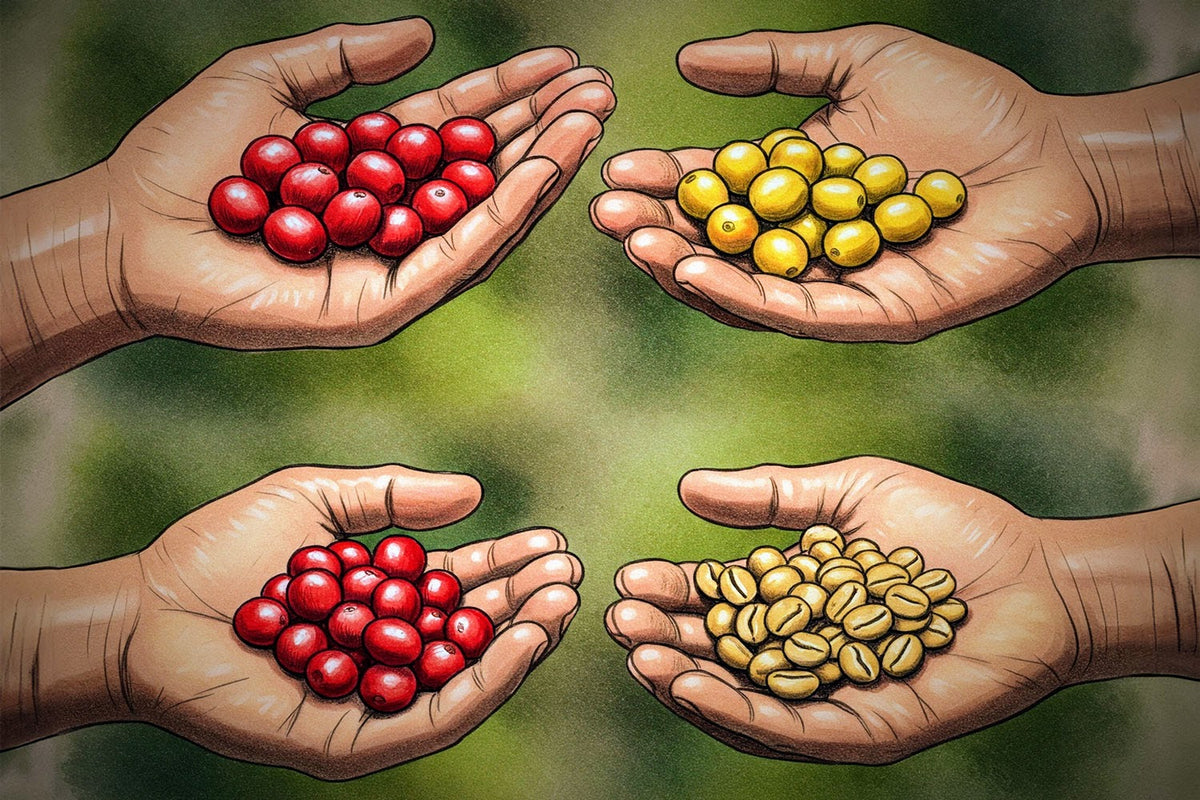
Two Ethiopian coffees, one washed, the other naturally processed. Most specialty coffees will note this on the label. If you’ve ever enjoyed a cup of coffee with a clean, crisp flavor and bright acidity, chances are it was processed using the wash method. Here’s how it works: After the cherries are picked, the outer skin is removed and the beans are soaked in water for up to 72 hours. During this time, natural bacteria and yeast break down the sticky skin on the beans. Once fermentation is complete, the beans are washed thoroughly and dried.
This precise process highlights the inherent characteristics of the coffee beans, often resulting in aromas described as citrusy, floral, or even wine-like. It is particularly popular in regions like Colombia, Guatemala, and Kenya, places known for producing some of the most vibrant coffees in the world.

The natural process is the oldest method of coffee processing and is still widely used today, especially in regions where water is scarce, such as Ethiopia, Yemen, and parts of Brazil. How does it work?
Instead of removing the cherry flesh immediately, the whole cherries are spread out in thin layers in the sun and left to dry for several weeks. As the cherries dry, the sugars and other compounds in the fruit migrate into the beans, resulting in a pronounced, often fruity flavor profile with hints of berries, tropical fruits, and more often a hint of fermentation. These coffees often have a heavier body and lower acidity than washed coffees.

Yes, that's the process that led me to embark on this learning journey. And I found it to be quite complex and varied.
Think of the honey process as a middle ground between washed and natural methods. After the cherries are cleaned and the cherry flesh is removed, the cherries are dried with varying amounts of the mucilage left intact. The name “honey” doesn’t refer to the flavor, but to the sticky texture of the cherries during drying (tricky!)
This method can produce a wide range of flavors depending on how much of the skin is left on the beans and how they are dried. This is where it gets even more complicated. Let's break down the different types:
And guess what: we haven’t even touched on the truly experimental and innovative processing techniques yet, but we’re about to get into some really interesting methods. In recent years, these innovative processing approaches have shaken up the coffee world. These techniques aim to enhance or create new flavor profiles, often producing unique and exciting results.

Coffee blends that include anaerobically fermented beans taste fantastic! This method involves fermenting coffee cherries or beans in sealed tanks without oxygen. By controlling the environment, specific microorganisms thrive, producing unique flavors and aromas. Anaerobic coffees are known for their bold fruitiness, hints of spice, and creamy texture.
There is a very interesting side effect of this method: roasted coffee, when ground and brewed, will often curdle milk! I tell you this because the bakery I bought my first anaerobically fermented coffee from didn’t mention this. This coffee is absolutely amazing (notes of chocolate, vanilla, cola, and blackberries!), but it scared me the first time I tried adding some cream to it – it all curdled on top!
This is a method I haven't been able to try yet, and I'm looking for a good source. Borrowed from winemaking, carbonic maceration involves placing whole coffee cherries in a tank filled with carbon dioxide. This creates an internal fermentation process, breaking down the fruit from the inside out.
The result? Supposedly, it produces coffee with vibrant wine-like characteristics, intense sweetness, and juicy acidity. This process is being used by forward-thinking farmers eager to experiment with new flavor profiles.
If you know of a particularly good coffee using this processing method, let me know in the comments below!
Another processing method that I have yet to try, but it sounds really exciting. Thermal shock is exactly what it sounds like – coffee cherries are exposed to sudden temperature changes, often by immersing them in hot water for a short period before processing. The idea is to change the cell structure and enzyme activity of the beans.
Although this is still a new method, early results show that it can improve sweetness and body while reducing bitterness. Producers are still perfecting this process, but it holds promise as an exciting avenue for flavor development.
The way coffee is processed has a profound impact on its flavor profile. Roasted coffees often emphasize bright, clean flavors with high acidity, while natural coffees tend toward bold, fruity, and full-bodied cups. Honey-processed coffees strike a balance, offering varying degrees of sweetness, body, and fruitiness depending on the specific method used.
When it comes to experimental techniques, there are virtually no limits to the methods. Anaerobic fermentation and carbonic maceration often create intense, unique flavor experiences that push the boundaries of what we expect from coffee. Seriously, this Empire Blend I had from Klatch was a coffee on another level (just don’t add milk!). Thermal shock, while still evolving, offers another tool for brewers looking to make exceptional coffees.

Different regions naturally gravitate towards specific processing methods based on climate, water availability and tradition. In Ethiopia and Yemen, where water is scarce, the natural process has been the standard for centuries. Latin American countries such as Colombia, Guatemala and Costa Rica often prefer the washing method due to their access to water and focus on clean, high-quality beverages.
Meanwhile, Costa Rica’s innovation with the honey-making process is spreading across Central and South America, as experimental techniques are being adopted by forward-thinking producers around the world. In a way, it’s also a tool to at least address the impacts of climate change, because it uses less water than wet processing.

A year ago, I really had no idea about coffee processing methods. I mean, I had heard terms like "naturally processed" and "washed," but I never really stopped to think about what they actually meant. A bit embarrassing for someone who loves coffee, right?
Now I’ve learned about things like red honey processing and carbon maceration (which I really want to try someday). Understanding these methods has vastly improved the way I choose coffee. It’s like having an X marked on a map where I can find my favorite flavors. Personally, I like coffees that are juicy, fruity, and full-bodied, but without that strong fermented flavor you sometimes get from natural coffees. It turns out that anaerobic fermentation is a game-changer for that: it tones down the “funky” fermentation notes you usually get from natural processing, and increases the juicy fruit and body.
What I find super fascinating is how some of these techniques are borrowed from other industries, like winemaking. And people are innovative, which is pushing coffee growers and importers to get creative with new methods. They’re constantly looking for ways to grow better coffee while dealing with changing weather conditions. Some methods, like the honey process, not only help with efficiency, but also unlock new, exciting flavors in the cup. It’s a win-win for us coffee lovers.
It's funny how much more fun coffee becomes when you delve deeper into how it's made. Now I can't help but think about the processing every time I buy a new pack. Maybe after reading this, you will too!