
What are the different roasts for coffee?
|
|
Time to read 3 min
Order for more €49 for Free shipping!
|
|
Time to read 3 min
Light, Scandinavian, medium or dark. Blend or single (from one farm or region). These are words you’ve probably seen on the packaging of the coffee you buy. Maybe on the package or in the coffee shop, but what do they really mean? In this article, we’ll look at what each of these terms mean and what they’re best for. We want to empower you to make the best decisions when buying your next coffee.
As the name suggests, the coffee is roasted for a shorter time than others. In theory, this preserves the specific flavor and unique characteristics of the variety and its terroir. Lightly roasted coffees retain more of their natural acidity, which results in a brighter and more delicate cup. Lightly roasted coffee is often recommended for filter coffee, over espresso. The main reason for this is that with this roast, the coffee is more difficult to dissolve and therefore needs a longer time to pass into the cup. In general, light roasting is recommended for high-end coffees that have a very specific flavor palette and the goal is to preserve it so that you can enjoy it fully.
Nordic is a word used to describe a very light roast coffee. The name comes from the fact that Scandinavian bakeries have been promoting this style of very light roast coffee since 2004. These countries are primarily filter coffee drinkers, preferring it over espresso, which is why the roast is associated with Scandinavia. That doesn’t mean they can’t make a delicious espresso. When making light coffees, the long extraction time makes a huge difference in the taste. If you ever struggle with Scandinavian coffee, before using your filter or Aeropress, try brewing the coffee for 5+ minutes and then extracting. When making Scandinavian espresso or filter, remember that if you like it, that’s all that really matters.
Medium roasts have a longer development period in the roastery than light or Scandinavian roasts. There are generally no universal rules that firmly define light and medium roasts. Generally speaking, medium roasts are intended to be quite versatile. They should be good as a filter or schwarz, as well as tasty as an espresso. Most medium roasts will probably be better suited for espresso than a filter, but this ultimately comes down to personal preference. Medium roasts can be either single origin or a blend of several coffees. It is also worth noting that "universal roast" is a term that is usually associated with medium roasts. It gets its name "universal" because it is intended to be used for any brewing method.

Coffee capsules are usually medium to dark roast
Dark roast coffee undergoes a lengthy roasting process. Generally, coffee considered dark reaches what is known as a "second crack" during roasting. It is generally accepted by all roasters (a rarity in the coffee world) that any coffee must reach a "first crack" to be considered roasted. First crack is a reaction during roasting in which the coffee beans expand and open slightly to release the built-up rotational pressure during the heating process, like a less dramatic version of popping popcorn. Second crack is when the coffee is roasted long enough that the internal temperature of the bean becomes so hot that the oils in the coffee come out through the surface.
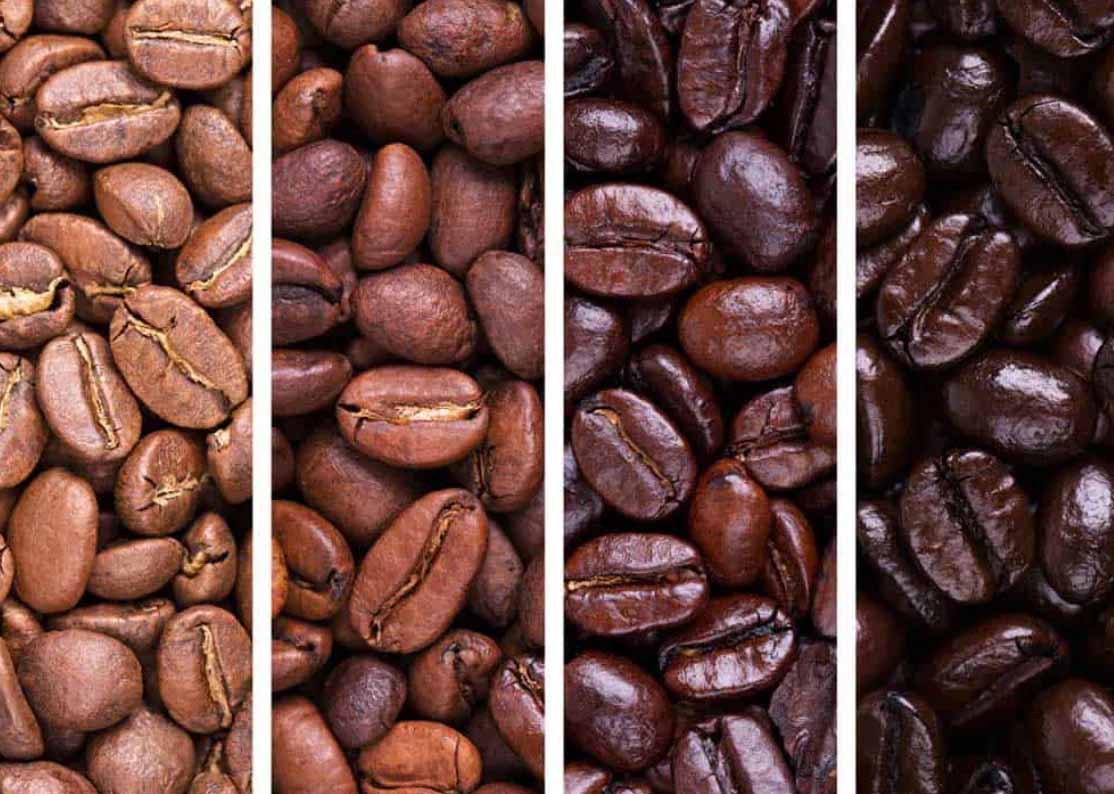
Coffee roasted this way is easy to spot, as the oils are clearly visible on the surface of the beans, giving them a shiny appearance. This is also how the roast level is determined - if the coffee is dull, it is more likely to have only one crack and is medium roast. If it is shiny, it is most likely dark roasted and the oils have come out after the second crack.
This is precisely the time to mention that the durability of medium-roasted coffees is better than dark-roasted ones, because in the latter the oils oxidize more easily and, accordingly, the taste deteriorates more quickly.
For this reason, all coffee capsules and single coffee doses retain their flavor characteristics extremely well because they are packaged in a nitrogen environment, without oxygen, so that you can fully enjoy the fresh aroma and full flavor.

When roasted dark, the origin and characteristics of the coffee are often overshadowed by smoky, toasted, and caramelized notes. Dark coffees tend to have a fuller body and a slight bitterness. They can, of course, be brewed as a filter coffee, but they will definitely bring out more of the flavor imparted by the roast when brewed as an espresso. In most of the world, dark roast coffee is traditionally served as an espresso, not a filter. However, if you need an excuse to experiment, in Japan, dark roast coffee is still served in traditional and modern cafes as a filter.